Is an Esports Viewer Apocalypse Coming? Indonesia’s Under-16 Social Media Ban Threatens to Slash 14% of Global Viewership!
JAKARTA – The Indonesian esports industry is standing at a critical crossroads. On one hand, the government is intensifying its commitment to protecting the younger generation from digital addiction; on the other, the economic foundation of the nation’s creative digital sector specifically esports is bracing for a massive shockwave.
The Minister of Communication and Digital Affairs, Meutya Hafid, has officially confirmed that starting March 28, 2026, the government will enforce a strict ban on “high-risk” social media platforms for citizens under the age of 16. This policy is the cornerstone of the “PP Tunas” child protection initiative.
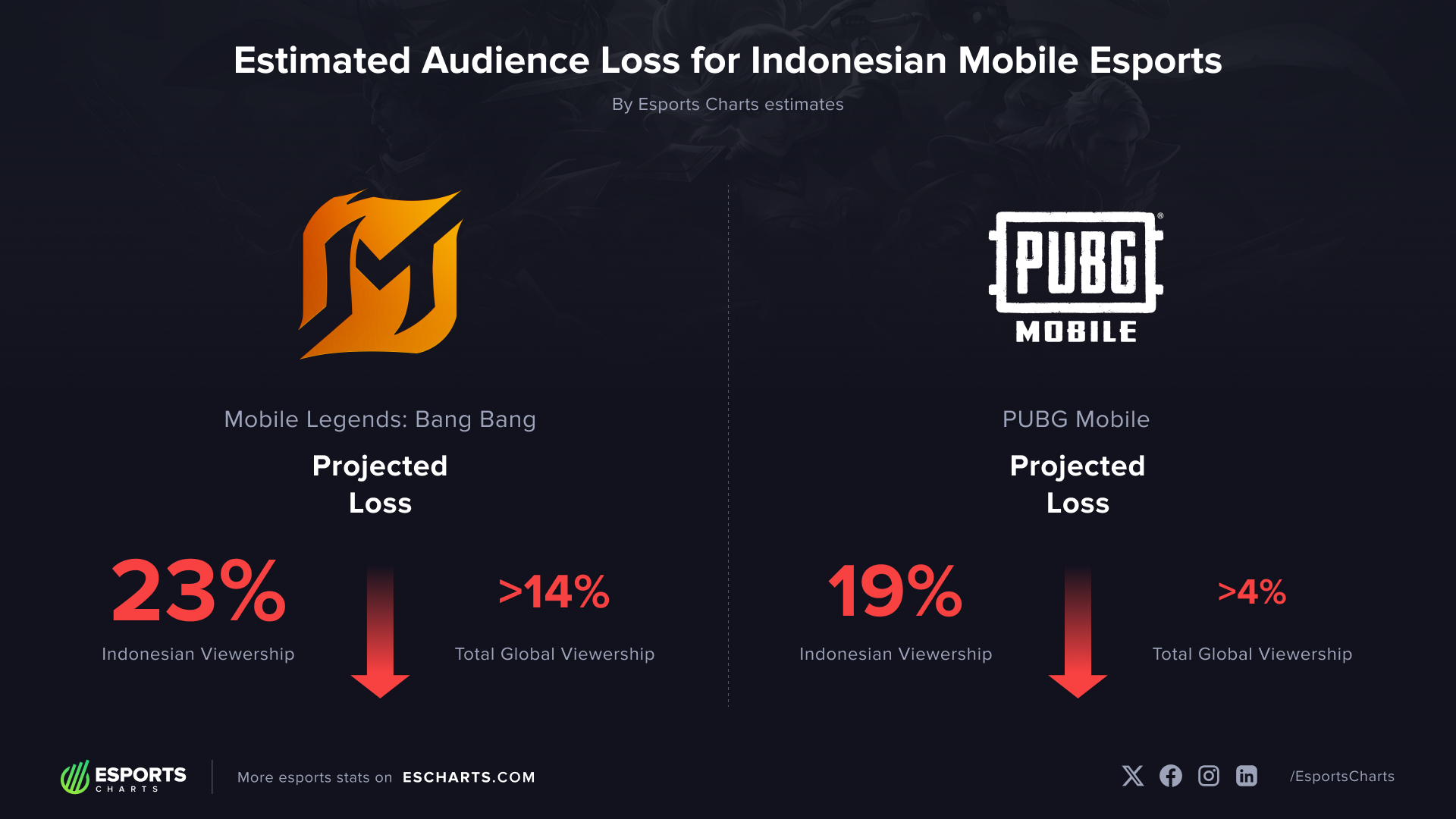
However, a new report from Esports Charts serves as a stark warning: this regulation has the potential to trigger a “mass exodus” of viewers, potentially cutting overall esports viewership by up to 14% a figure significant enough to destabilize a rapidly growing ecosystem.
READ MORE: Drama at IKL Spring 2026: Competitive Discipline or Unfair Burden for Bigetron?
1. The “High-Risk” Blacklist: From YouTube to Roblox
Under Government Regulation (PP) No. 17 of 2025, digital services are classified based on algorithmic risk and content history. Platforms deemed “High-Risk” are now legally required to deactivate accounts held by users under 16 or face severe sanctions, ranging from heavy fines to total termination of access within Indonesian territory.
The restricted platforms include:
-
TikTok & Instagram: The primary windows for short-form esports content.
-
YouTube: The global home for tournament live streams.
-
X (Twitter) & Facebook: The hubs for community discussion and news.
-
Roblox & Bigo Live: Key platforms for social interaction and gaming.
The Ministry justified this move by citing data showing that nearly 50% of Indonesian children have encountered inappropriate content or experienced cyberbullying. By mandating age verification at the platform level, the state aims to shift the burden of safety from parents to the tech giants themselves.
READ MORE: CS GO: Datang Kembali di Steam, Tapi Scene Esports Dipastikan Tidak Akan Bangkit Lagi!
2. The Domino Effect on Mobile Legends and PUBG Mobile
Indonesia is a global gaming powerhouse with 155 million active players covering over half the nation’s population. At the heart of this phenomenon is Mobile Legends: Bang Bang (MLBB), which acts as the “social glue” for Indonesian youth.
Data from Esports Charts highlights the vital role of these young fans:
-
M7 World Championship (Jan 2026): Reached a staggering peak of 5.68 million concurrent viewers. Indonesian fans contributed a massive portion of this, specifically through TikTok Live, which drew 1.4 million peak concurrent viewers from Indonesia alone.
-
MPL Indonesia Season 16: Generated over 100 million hours of watch time.
By legally severing the connection between these leagues and fans under 16 on YouTube and TikTok, the government might be dismantling the very bridge that supports the industry’s massive engagement metrics.
3. Projected Decline: MLBB Faces a 23% Watch Time Drop
Analysis from Esports Charts, Moonton, and Niko Partners projects a grim reality for esports organizations and sponsors. If the ban is strictly enforced:
| Esports Title | Projected Drop in Local Hours Watched | Projected Global Impact |
| Mobile Legends (MLBB) | -23% | -15% |
| PUBG Mobile | -19% | -4% |
Why is MLBB hit harder globally? Because Indonesia is the primary engine for the game’s global ecosystem. A 23% drop in the local market automatically translates to a 15% decrease in total global watch time. PUBG Mobile, meanwhile, faces a more moderate global loss of 4% due to its more geographically diversified audience.
READ MORE: Akankah EWC 2026 Ditunda? Efek Konflik di Timur Tengah Bergejolak
4. The “Worst Possible Timing”: MPL ID Season 17 in Jeopardy?
The enforcement of this ban is set for March 28, 2026. Ironically, this is exactly one day after the grand opening of MPL Indonesia Season 17 (March 27, 2026).
MPL ID has long been the gold standard for mobile esports success. Launching a new season just as millions of young fans are banned from streaming platforms could be a catastrophic blow to opening-week statistics. Sponsors who invested billions based on last season’s metrics may now find themselves re-evaluating the value of their partnerships.
5. The Dilemma: Digital Discipline vs. Creative Economy
The regulation has sparked a fierce debate. While protecting a child’s mental health and safety is a non-negotiable priority, esports has become a pillar of the digital economy, providing jobs and attracting significant foreign investment.
Industry experts are calling for a “middle ground,” such as verifiable parental consent mechanisms rather than total deactivation. Without a flexible solution, this young demographic might turn to illegal streaming platforms or drift away from a legal digital entertainment ecosystem that has contributed heavily to the nation’s GDP.
Conclusion: Adapt or Fade Away?
The Indonesian esports industry must now adapt to a much harsher regulatory reality. While a decline in viewership seems inevitable, this could also be a catalyst for the growth of local streaming platforms or in-game viewing features as alternatives to “high-risk” social media.
One thing is certain: the face of Indonesian esports after March 28, 2026, will never be the same again.
Data Sources:
-
Esports Charts (https://escharts.com/)
-
Indonesian Ministry of Communication and Digital Affairs (Meutya Hafid – PP Tunas)
-
Niko Partners Gaming Research



Leave a Comment