LPL and CBLOL Defy Gravity While LCP’s Audience Vanishes in Structural Chaos
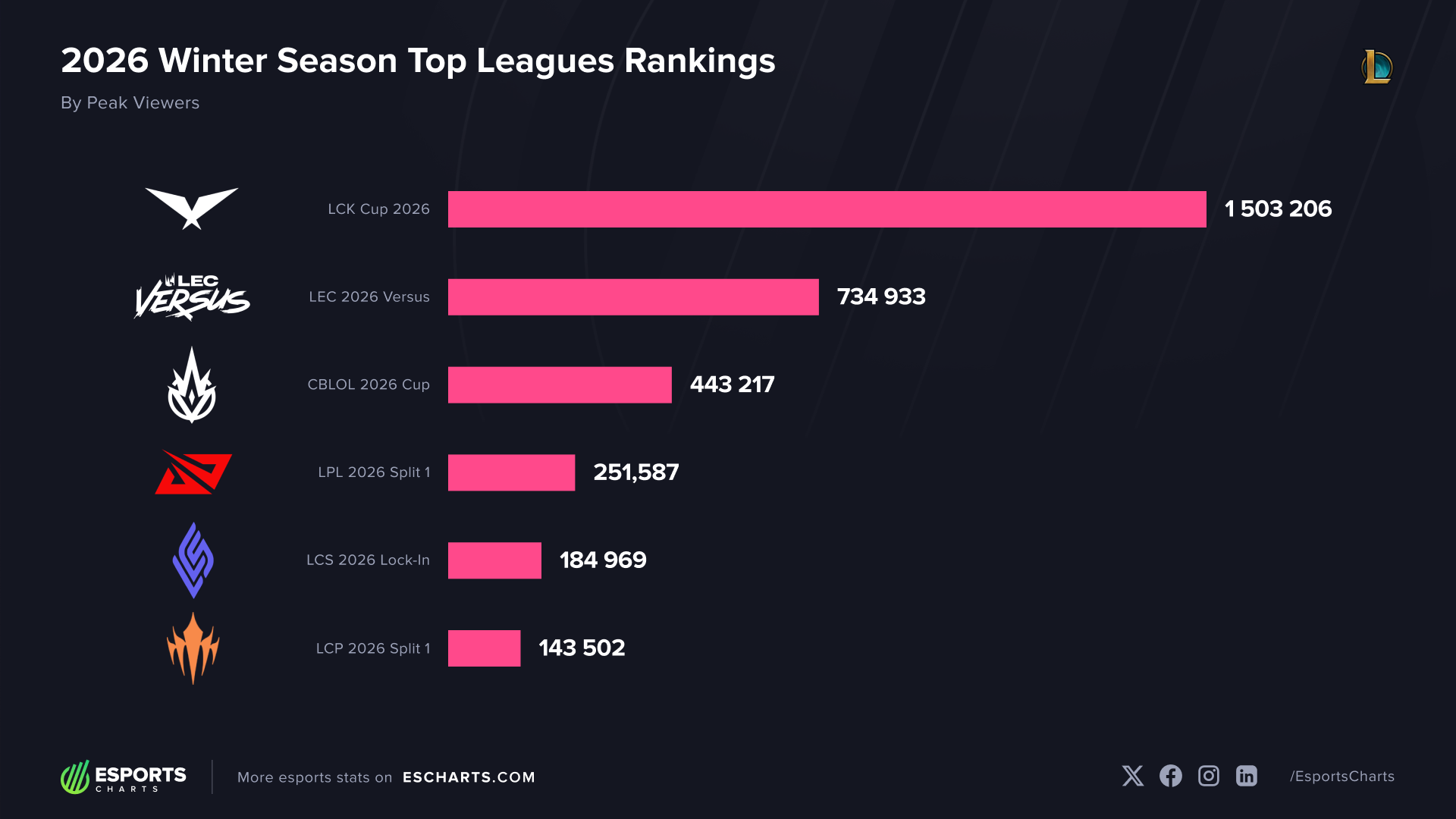
DETIK GAMING, JAKARTA / SÃO PAULO – As the global League of Legends community descends upon Brazil for the highly anticipated First Stand 2026 tournament, the dust has finally settled on the winter splits. The data is in, and it paints a picture of a world divided.
While certain regions have managed to “defy gravity” by reaching new viewership heights despite massive upheaval, others have found themselves trapped in a downward spiral. According to the latest comprehensive analytics from Esports Charts, the story of early 2026 is one of structural resilience in the West and East, contrasted by a staggering collapse in the Pacific.
1. LPL China: The Phoenix Rises Without its Namesakes
The biggest surprise of the year comes from the LPL. Following the shock exit of legacy titans Royal Never Give Up (RNG) and FunPlus Phoenix (FPX), many predicted a “dark age” for Chinese viewership.
Instead, the LPL recorded its highest peak viewership in two years. By trimming the league from 16 to 14 teams and introducing a high-stakes multi-stage group format with a fresh draft system, the league has successfully “gamified” the viewing experience. International interest has surged, proving that the LPL brand is now bigger than any single legacy organization.
2. CBLOL Brazil: Independent and Unstoppable
Brazil is officially back, and the passion is infectious. After the conclusion of the LTA experiment, CBLOL returned to its roots as a standalone Tier-1 league. The integration of Leviatán (from Argentina) has added a new “LatAm” flavor that has set the airwaves on fire.
CBLOL recorded the largest percentage increase in peak viewership among all major global leagues this winter. The Brazilian broadcast continues to prove it is an independent powerhouse that doesn’t need global consolidation to thrive—it only needs the raw, unfiltered rivalry of its local and regional heroes.
3. LCK South Korea: The T1 Factor and the “Long Game”
The LCK remains the gold standard of professional play, yet its metrics this winter tell a story of “what could have been.” Total Hours Watched (HW) spiked significantly, but this was largely due to a meta that produced fewer 2:0 sweeps, leading to longer broadcast marathons.
However, the league hit a ceiling when T1—the ultimate viewership engine—suffered an uncharacteristically early playoff exit. Without Faker and his squad in the grand final, the LCK missed out on breaking all-time records, proving that even the most stable league in the world is still heavily tethered to its most iconic stars.
4. LEC EMEA: The “Creator” Injection
The LEC’s winter experiment was a tactical masterstroke. By promoting ERL (regional) powerhouses Los Ratones and Karmine Corp Blue, the league successfully injected a massive dose of “influencer” energy into the broadcast.
While the average viewership saw a slight dip, the expanded schedule and the sheer volume of “must-watch” matches involving these creator-led teams kept the Hours Watched on an upward trajectory. The LEC has effectively bridged the gap between professional play and community-driven hype.
5. LCS North America: Stability Returns to the Rift
After years of turbulence, the LCS brand appears to have found its footing. The shift to a more comprehensive group stage and the entry of Sentinels (replacing 100 Thieves) has stabilized the ship. While the region is still a far cry from its “Golden Era” numbers, the upward trend in peak viewership suggests that the North American audience is slowly but surely returning home.
6. LCP Pacific: A “Viewer Ghost Town”
The only true casualty of the winter season was the LCP. Every major metric—Peak Viewers, Average Viewers, and Hours Watched—went into a tailspin. Several factors created this “perfect storm”:
-
The Exit of Icons: The departure of PSG Talon and the early exit of GAM Esports left a vacuum in star power.
-
Structural Blunders: A decision to move broadcast start times earlier effectively locked out the league’s core demographic of students and working professionals.
-
Identity Crisis: High roster turnover left fans feeling disconnected from the teams they once cheered for.
Conclusion: All Eyes on First Stand 2026
As we look toward the First Stand 2026 kickoff this Monday, March 16, the viewership dynamics of the winter splits will dictate the narrative. Will the LPL’s new international fans carry their momentum into the global stage? Can the Brazilian “CBLOL” fire burn even brighter on home soil?
One thing is certain: in the world of League of Legends, those who refuse to adapt to their audience are quickly left behind.
Source Data:
-
Esports Charts (https://escharts.com/)
-
Regional League Official Stats (LPL, LCK, LEC, CBLOL, LCS, LCP)
Leave a Comment