Deals and Transformations , Business strategies in the esports industry in Q1 2026
The first quarter of 2026 marked a period of structural transformation for the global esports industry. With the given global macroeconomic instability, characterized by layoffs across the broader gaming sector and a strategic pivot of parent tech companies toward artificial intelligence, the esports market demonstrated a surprising level of adaptability. The era of unchecked venture-driven growth has definitively given way to a phase of pragmatic consolidation and revenue diversification.
Deal activity during this period reveals a clear polarization of the market. On one side, there are unprecedented large-scale acquisitions driven by Middle Eastern sovereign capital, aiming to monopolize entire segments, particularly in mobile esports. On the other, at the micro level, esports organizations are actively experimenting with hybrid financing models, ranging from direct crowdfunding and integration with traditional sports clubs to expansion into regulated betting and financial markets.
Publishers and tournament operators
Within the publisher and independent tournament operator segment, Q1 2026 was defined by two dominant trends: the rapid capitalization of mobile esports and the technological monopolization of tournament ecosystems by key hardware and software providers.
Strategic brand expansion: Cross-category partnerships
A defining characteristic of the quarter was the large-scale intervention of non-endemic and tech brands, simultaneously targeting tournament operators, publishers and esports teams.
ASUS Republic of Gamers (ROG): Total control of tournament hardware
ASUS ROG pursued an aggressive strategy to establish itself as the default technical partner at the highest level of competitive esports through a series of major deals.
In February, ASUS ROG secured a season-long partnership with PGL for 2026. The agreement covers the full supply of tournament hardware, including ROG Strix XG248QSG Ace monitors featuring a record-breaking 610Hz refresh rate, as well as RTX 5080-powered PCs. This setup will be deployed across all PGL events in CS and Dota 2, including the upcoming Major in Singapore, effectively standardizing hardware across some of the most valuable tournaments in the ecosystem.
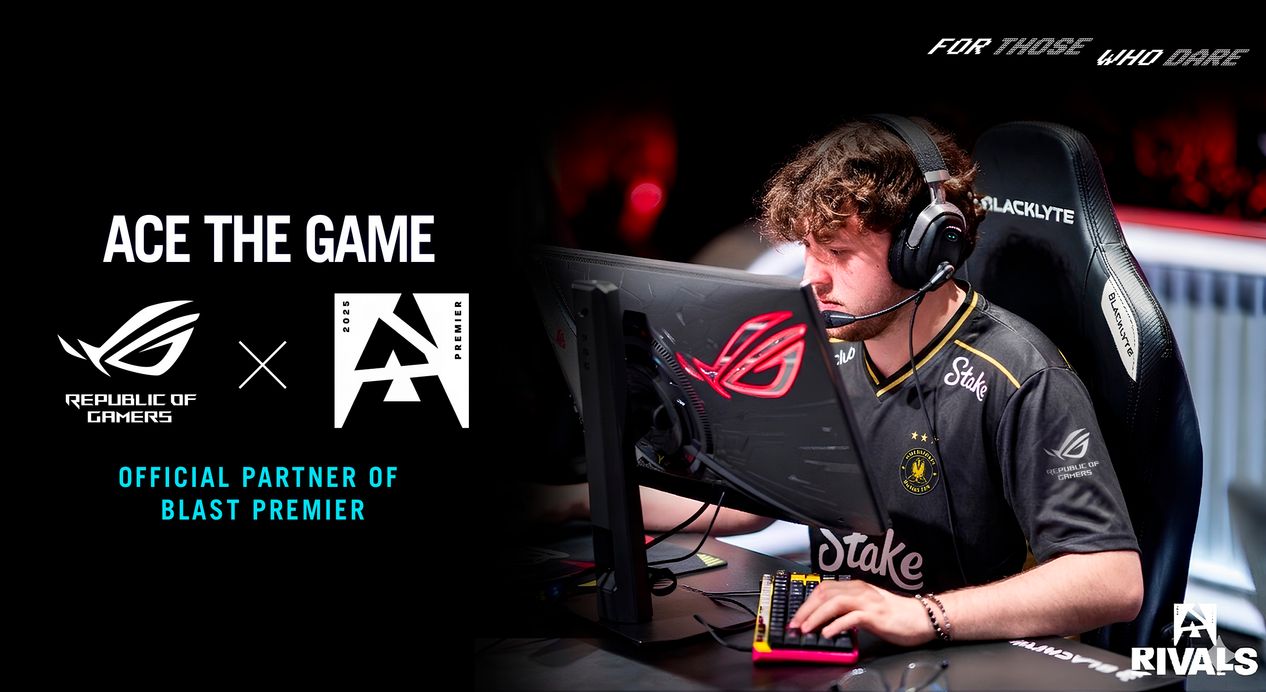
In parallel, ASUS ROG extended its long-standing collaboration with BLAST Premier. The renewed agreement spans six tier-1 events across three continents, combining deep broadcast integration with on-site brand activations such as dedicated ASUS zones at arena venues.
The brand further strengthened its presence within the League of Legends ecosystem by becoming the official PC sponsor of the LCK Cup 2026 Finals, held at the Kai Tak Arena in Hong Kong.
Beyond tournament operators, ASUS ROG also expanded its footprint at the team level. In January, the company signed a two-year partnership with South Korean organization DRX. Under the agreement, players across its Valorant and League of Legends rosters will use ROG equipment while also contributing to the testing and development of new products.
ZOWIE: Maintaining dominance in tactical shooters
ZOWIE, the esports-focused brand under BenQ, spent the first quarter of 2026 reinforcing its long-held position as the industry standard in tactical shooters.
In February, when ZOWIE was selected as the official monitor supplier for IEM Krakow, one of the most prestigious tournaments in the Counter-Strike calendar. The event featured the XL2586X+ monitors with a 600Hz refresh rate. This momentum carried into March, when ZOWIE secured a global extension of its partnership with ESL FACEIT Group; the renewed agreement guarantees the continued use of ZOWIE monitors across ESL Pro League and major CS events, effectively locking in its presence at the highest level of competition.
At the same time, the brand continued to expand its reach within the Valorant ecosystem. In March, Indonesian esports organization RRQ named ZOWIE as its official technical partner for the VCT Pacific 2026 season.
Razer: Expanding through ergonomics and culture
Throughout the first quarter of 2026, Razer pursued a diversified sponsorship strategy that extended beyond pure performance, targeting both the functional needs of esports athletes and the broader cultural dimensions of gaming.
In January, Riot Games named Razer the official gaming chair partner for VCT EMEA and Game Changers EMEA for the 2026 and 2027 seasons. The integration of Razer Iskur V2 chairs into competitive environments addressed a growing focus on player ergonomics and long-term physical comfort, while simultaneously ensuring consistent on-screen brand visibility during broadcasts.
In parallel, Razer reinforced its long-standing presence at the team level by extending its partnership with German organization MOUZ in March. The renewed two-year agreement continues a well-established relationship, with Razer supplying high-performance peripherals across all of the club’s rosters.
At the same time, Razer demonstrated a clear intent to expand beyond traditional esports boundaries. In January, the company announced a collaboration with Neon Genesis Evangelion, launching a line of peripherals inspired by Eva Unit-02.
ExpressVPN: Infrastructure as a sponsorship asset
While VPN providers have been present in esports for years, the deals announced by ExpressVPN in March highlight a change in how this category positions itself within the industry.
At the center of this push was a global partnership with Riot Games, under which ExpressVPN became the official VPN partner for three of the publisher’s flagship competitions: VCT EMEA, VCT Americas and the European LEC. The scope of the agreement ensures consistent integration across multiple regions and titles, positioning the brand at the core of Riot’s competitive ecosystem.
At the same time, ExpressVPN extended its presence to the team level through partnerships with G2 Esports and Method, the latter known for its prominence in the MMORPG segment. These agreements reflect a broader alignment with organizations that operate heavily in online-first competitive environments, where network performance is an actual competitive variable.
Mobile esports: MOONTON’s landmark acquisition
The mobile esports segment, long perceived as a niche in Western markets, firmly established itself in 2026 as the primary financial driver of the global esports industry.
This shift is best illustrated by one of the most high-profile deals of the quarter, which, while not yet officially finalized, has already sent shockwaves across the market. According to multiple reports from major business outlets such as Reuters and Bloomberg, Savvy Games Group, backed by Saudi Arabia’s Public Investment Fund (PIF), is in the process of acquiring MOONTON, the developer of Mobile Legends: Bang Bang, in a deal valued at approximately $6 billion.
If completed, the transaction would mark a strategic divestment by ByteDance, which originally acquired MOONTON for around $4 billion in 2021 and is now reportedly refocusing its priorities toward generative AI. More importantly, the implications for esports are substantial. PIF already controls ESL FACEIT Group, and the addition of MOONTON under Savvy’s umbrella would create an unprecedented level of vertical integration, effectively placing both a leading tournament operator and one of the world’s most popular esports titles under the same ownership structure.
Ahead of the deal’s formal completion, the MLBB ecosystem has demonstrated strong commercial momentum. In January, the M7 World Championship in Jakarta attracted Red Bull as an official partner, marking the brand’s first integration into the M Series and signaling that mobile esports has reached a scale comparable to traditional sports properties.
This momentum continued in March, when smartphone manufacturer Infinix became the title partner for multiple regional leagues, including MPL Indonesia, MDL Indonesia and MLBB Super League Thailand, a highly organic fit given the hardware-driven nature of mobile gaming.
At the same time, MOONTON has been actively expanding its footprint in Western markets. In February, the company renewed its partnership with the Portuguese Esports Federation, positioning the country as a strategic entry point for mobile esports into Europe’s more conservative competitive ecosystem.
Riot Games: League optimization and sponsorship evolution
In the first quarter of 2026, Riot Games continued refining the commercial framework of its franchised leagues, with South Korea’s LCK emerging as a focal point of structural change.
Exclusive streaming rights for the LCK were granted to local platforms Naver (CHZZK) and SOOP for the next five years. This transition not only reshaped the regional media landscape but also reinforced the growing importance of domestic platforms in controlling premium esports content. As part of the broader agreement, Naver secured naming rights for the league’s iconic venue, rebranding it as “CHZZK LoL Park,” further embedding the platform into the LCK ecosystem.
Momentum continued into March, when the league strengthened its commercial portfolio through a sponsorship deal with Gillette, covering both the Spring and Summer splits of 2026. The addition of a legacy FMCG brand to the partnership lineup serves as a strong signal of the LCK’s enduring appeal to traditional advertisers, even amid broader shifts in the global esports economy.
3rd-party tournament operators: Adaptation and monetization innovation
Independent tournament operators entered 2026 with continuous pressure to adapt, as publisher-driven constraints force them to reconsider financial structures and monetization strategies.
ESL FACEIT Group
Following Valve’s decision to grant IEM Cologne 2026 Major status, which comes with tightly regulated prize distributions, EFG reallocated $250,000 from Cologne’s Club Rewards pool to bolster IEM China. It pushed the total reward pool of the Chinese event to $950,000, creating a stronger financial incentive for top-tier organizations to commit to the Asian circuit and reinforcing the region’s growing importance within the global CS ecosystem.
At the same time, EFG began experimenting with new monetization layers. In January, the company announced a global partnership with the betting platform CHEXX, introducing crypto-based mechanics, instant transactions and interactive broadcast integrations. These features point to a broader effort to modernize audience engagement by blending esports viewership with real-time, participatory financial elements.
BLAST
BLAST followed a parallel path, leaning into alternative betting formats to unlock new revenue streams. In February, the operator partnered with blockchain-based platform Polymarket, introducing prediction markets that allow users to trade on the probability of match outcomes. Unlike traditional sportsbooks, this model aligns more naturally with decentralized internet culture and carries less of the reputational friction typically associated with betting, offering BLAST a more nuanced way to monetize audience interest.
Others
A number of additional developments across different regions and titles further illustrate how the global esports ecosystem continued to expand through targeted partnerships:
-
Rocket League: RLCS secured a sponsorship deal with tire manufacturer Michelin, representing a highly native integration of a real-world automotive brand into the virtual racing environment of Rocket League.
-
Overwatch: DHL extended its partnership with the Overwatch Champions Series, maintaining its role as a key partner in the logistics-heavy operations behind competitive esports events.
-
CS in South America: Regional tournament operator FiReSPORTS officially confirmed Buenos Aires as the host city for a CS2 Major in 2027, marking the first Major in South America in five years and signalling Valve’s confidence in the region’s growth potential.
-
Saudi eLeague: The Saudi Esports Federation partnered with Yalla Group, with a notable focus on sponsoring the Women’s Saudi eLeague, aligning with broader national initiatives aimed at expanding female participation in the technology and esports sectors.
Esports teams and organizations
At the esports club level, the first quarter of 2026 was a period of active pursuit of financial stability. Teams, previously relying on venture capital funding, now develop cross-media contracts, legalized betting sponsorships, crowdfunding and deep integration with traditional sports.
The Korean streaming market: Teams as exclusive media assets
The closure of Twitch’s Korean division two years ago created a market gap, prompting competition between two local platforms: SOOP (formerly AfreecaTV) and Naver CHZZK. Esports organizations, possessing substantial loyal audiences, became a primary asset in this platform competition.
The SOOP Ecosystem
In January, the KT Rolster signed a two-year exclusive streaming agreement with SOOP. All team players will broadcast directly on this platform until the end of 2027.
DN FREECS underwent a full rebranding, changing its name to DN SOOPers ahead of the 2026 season.
The CHZZK Ecosystem
Competing platform CHZZK signed exclusive partnerships with Nongshim RedForce and Hanwha Life Esports in January. The agreements cover all rosters (including LoL, Valorant and FC Online) and involve the creation of original IP content. This market division effectively fragmented the Korean audience across the two platforms.
Continuous integration of regulated betting
For a long time, Riot Games maintained a strict ban on the presence of betting brands within its franchised leagues. The financial requirements of the clubs prompted a policy shift in January 2026.
Winamax became the first betting company to receive official approval from Riot Games to sponsor teams in Europe. Winamax signed multi-year contracts with G2 Esports and Team Heretics. To comply with Riot’s strict guidelines, the partnership with G2 focuses on content. The organizations launched a joint analytical podcast, “HopEUm”, covering LEC events. The deal encompasses the LoL rosters alongside the G2 FC roster in the Kings League Germany media football league. Spain’s Team Heretics secured similar sponsorship activations for their jerseys and digital platforms.
In disciplines with more liberal regulations, such as CS, betting sponsorships have long been standard practice. In March, the Danish organization Astralis signed a multi-year agreement with the crypto casino and betting platform Stake. The platform became Astralis’s official global partner and front-of-jersey title sponsor.
Crowdfunding, investments and joint ventures
The inability of certain clubs to attract traditional investments led to the emergence of new financing models.
Equity crowdfunding (Unicorns of Love). In January, the German organization Unicorns of Love launched a campaign on the crowdfunding platform Crowdcube, offering fans the opportunity to purchase up to 11% of the company’s shares. The direct sale of equity to fans is a method of converting audience attachment into financial liquidity.
Share consolidation (Karmine Corp). In February, Karmine Corp underwent internal restructuring. Club co-founder Amine ‘Prime’ Mekri sold his stake (approximately 25%) to an existing investor. The departure of a media figure from the ownership group indicated the organization’s transition from an influencer startup phase to a corporate governance model.
Joint ventures (Invictus Gaming). In March, the Chinese organization Invictus Gaming concluded an investment deal with World Sports Group, forming the joint venture WSIG Esports. The $11.6 million investment is directed toward integrating traditional sports methodologies into esports roster management.
Cross-industry integration
Esports clubs are increasingly expanding beyond the gaming industry to monetize their audiences in adjacent sectors.
In March, Team Liquid partnered with the English football club Sunderland AFC. Esports athletes will compete under the joint tag Team Liquid x Sunderland AFC in the ePremier League EA FC tournament. This grants Liquid access to a large UK football fan base. Furthermore, Liquid leveraged its corporate ties by selling exclusive naming rights for its Rainbow Six Siege roster to its long-term partner, Alienware (a Dell brand).
The South Korean organization DRX integrated the financial and medical sectors into its business model. The club signed a strategic memorandum of understanding with the brokerage firm Kiwoom Securities. The deal involves renaming the roster to Kiwoom DRX and developing specialized financial products for gamers. DRX also partnered with Jalbonun St. Mary’s Eye Clinic, focusing on the prevention of visual impairments among players.
Spain’s Team Heretics similarly addressed player health by signing a multi-year agreement with Maysun Clinic.
Sponsorship diversification
Hardware manufacturers and FMCG brands continued to sign contracts with teams.
Monetization of independent tournaments
In March, the North American organization Sentinels signed an agreement with the storage brand SanDisk. The deal includes jersey sponsorship and financial support for independent tournaments organized by Sentinels.
Integration into content and ecosystem
Dignitas x SteelSeries. The brand became the official peripheral supplier for the Fortnite division. The selection of this specific discipline is driven by Fortnite’s demographics and its focus on content creation.
Method x SCAN. The British organization Method partnered with the computer brand SCAN to support the Race to World First (RWF) events in World of Warcraft. The multi-day, 24/7 RWF broadcasts require high computational stability, making SCAN a suitable technical sponsor.
BBL Esports x ATK Gear. The Turkish organization signed a sponsorship contract with peripheral manufacturer ATK Gear ahead of its appearance at the VALORANT Masters Santiago tournament, aiming to increase the brand’s media reach.
Metizport x Samsung. The Norwegian CS2 team signed a deal with the technology company to become an ambassador for Samsung Odyssey OLED monitors. The core marketing message is that OLED panels meet the strict response time requirements of tactical shooters.
Team Secret x Dino Gaming. The agreement focuses on the strategic development of mobile esports infrastructure in Thailand, reinforcing the region’s position as a hub for mobile disciplines.
Dplus Kia x AndaSeat. The manufacturer provided ergonomic chairs for the Korean team’s training facilities, integrating its product into the daily practice environment.
Individual player sponsorship
In January, Corsair signed an exclusive contract with Lee ‘Gumayusi’ Min-hyeong, a LoL player and MVP of Worlds 2025. The brand is investing in the player’s personal brand, noting that audience loyalty to individual players can often exceed loyalty to the organization itself.
Non-endemic and cultural partnerships
Gen.G x OTOKI. The South Korean food brand placed its logo on Gen.G’s jerseys (LoL, Valorant), expanding esports marketing into the retail grocery sector.
FlyQuest x Tradeify. An educational partnership designed to teach gamers the basics of simulated trading.
RRQ x Frieren. The Indonesian organization launched a collaboration with the anime franchise “Frieren: Beyond Journey’s End”..
Infrastructure and technology
The long-term stability of esports relies heavily on grassroots collegiate programs and the evolving segregation of the hardware market.
Collegiate esports: PlayVS acquisition
In January, the North American scholastic esports platform PlayVS acquired the educational platform Vanta Esports, adding approximately 3,000 schools to its network. Historically, the North American esports sector has faced a shortage of local talent, often leading organizations to import players from other regions. Vanta Esports specialized in providing schools with verified coaches and structured training programs. Integrating Vanta’s coaching methodology into PlayVS establishes a vertically integrated talent pipeline in the US, spanning from elementary schools to universities. This infrastructure functions as a digital equivalent to the NCAA system in traditional sports.
Hardware segmentation: Pulsar eS
Peripheral manufacturer Pulsar Gaming Gears spun off its esports division into an independent brand, Pulsar eS. Management cited the need to separate mass-market product development, which focuses on aesthetics and versatility, from professional equipment engineering, which prioritizes low weight, minimal sensor latency, and driverless operation.
The brand’s flagship product, the Pulsar eS FS-1 mouse developed alongside VAXEE, utilizes a hardware transmitter that allows users to adjust DPI and polling rates directly via physical buttons, eliminating the need for software installations on tournament PCs. The creation of highly specialized sub-brands, similar to BenQ’s ZOWIE, indicates a maturing peripheral market where manufacturers are clearly dividing their technological solutions for casual consumers and professional players.
***
The first quarter of 2026 further proves that the esports industry has transitioned into a phase of commercial maturity. Unprofitable venture capital projects have been replaced by transactions involving sovereign wealth funds that are building global ecosystems (such as the Savvy Games Group and MOONTON acquisition). The lifting of the ban on partnerships with regulated betting operators within the Riot Games ecosystem opened a critical liquidity channel for clubs.
Simultaneously, local organizations have actively monetized their brands through direct fan engagement (crowdfunding), integration with traditional finance (brokerage services) and exclusive media contracts within regional streaming markets. The industry is developing into a complex, self-sufficient economy where long-term success relies on the ability to diversify revenue streams and establish deep infrastructure partnerships.
Leave a Comment