How does CS2 skin trading work and can you profit from this?
The CS2 skin market crossed $6 billion in total capitalization in October 2025, per Pricempire data reported by Dexerto. Players opened over 400 million cases that year, generating an estimated $1.15 billion in revenue for Valve from keys and Steam Community Market fees alone. This is not a niche hobby anymore: skin trading in Counter-Strike operates with its own pricing logic, liquidity patterns and risk factors, and a growing number of players treat it as a serious side income.
Platforms like PirateSwap sit alongside the Steam Community Market as part of a broader third-party ecosystem where players compare prices, find better deals and execute trades outside of Valve’s built-in system. If you’re new to trading or trying to scale what you’re already doing, here is how the market works and where the opportunities sit.
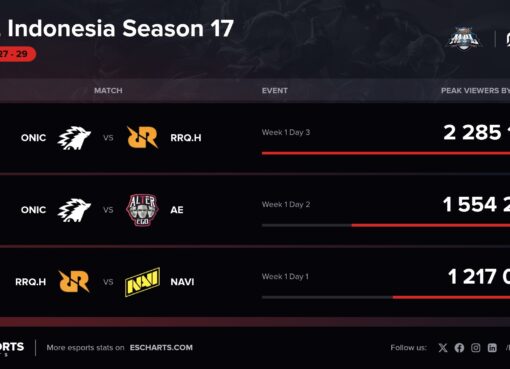
READ ALSO: RRQ’s debut boosts MPL Malaysia Season 17 Week 1’s viewership by 133.3%
How does the CS2 skin market work?
Two systems run side by side. The Steam Community Market is Valve’s official marketplace, where players list skins for sale and Valve takes a 15% cut on every transaction. It’s safe and integrated into the Steam client, but it caps listings at $2,000 and imposes trade holds that slow everything down.
Third-party platforms fill the gaps. They handle higher-value items (the most expensive CS2 skin sale on record is over $1 million for an AK-47), offer faster execution and let traders compare prices across multiple marketplaces at once. The tradeoff is counterparty risk; you’re trusting someone outside Valve’s system, which is why experienced traders stick to platforms with verified transaction histories and escrow systems.
What drives CS2 skin prices?
Skin prices move on a few specific things. Rarity is the obvious one, but it’s not the full picture. Float value (the wear rating from 0 to 1) matters. Pattern index matters, especially on items like Case Hardened knives where the blue percentage determines price. Stickers applied to a skin can add hundreds or thousands to its value, particularly if they’re from discontinued Major capsules.
Valve’s updates move prices too, and sometimes violently. In October 2025, an update to the skin economy caused a sharp market dip that wiped significant value off many inventories. The market recovered, but it showed how a single patch can change the rules overnight. Traders who weren’t paying attention got caught holding items that lost 20-30% of their value in days.
Major tournaments affect prices too. Sticker capsules tied to events like the CS Majors tend to spike during and after the event. Teams with strong fan followings see their stickers trade at premiums, and discontinued stickers from older Majors appreciate over time. Tracking which CS2 events are drawing the biggest audiences on Esports Charts gives traders a read on which team stickers are likely to hold or gain value.
How do you start trading CS2 skins without losing money?
Start small. The fastest way to lose money in skin trading is to buy an expensive item you don’t understand yet. Cheaper skins ($1-10 range) with high liquidity teach you how the market moves without putting serious money at risk. Look for items that trade frequently on the Steam Community Market. If you can’t sell it within a day, you’ve learned something about liquidity the cheap way.
Steam’s built-in trade restrictions are the first thing to plan around. Trade holds, mobile authenticator requirements and the 7-day cooldown on new purchases all slow your execution speed. Traders who factor these delays into their strategy avoid getting stuck with an item while its price drops. The authenticator is non-negotiable for security, but the cooldowns mean you can’t react to fast market moves on Steam the way you can on third-party platforms.
Compare prices across multiple sources before buying anything. The same skin can be listed at different prices on the Steam Community Market, third-party sites and in trading communities. That gap is where margin exists: if you’re buying at the lowest available price and selling at the highest, you’re already ahead of most casual traders.
What are the main ways to profit from CS2 skin trading?
Three models cover most of what active traders do:
-
Resale. Buy underpriced skins, sell at market rate. The margin is thin per trade but adds up with volume. This works best with liquid items in the $5-50 range where price data is reliable and buyers are active.
-
Arbitrage. Price differences between platforms create windows. A skin listed at $45 on one marketplace and $52 on another is a $7 spread minus fees. Arbitrage requires speed and access to multiple platforms, which is where tools that aggregate prices across marketplaces pay for themselves.
-
Holding. Some skins appreciate over time, particularly discontinued items, stickers from past Majors and operation-exclusive drops. The Kilowatt Case launch in 2024 showed how new cases can create short-term buying opportunities that pay off months later as supply tightens. Holding requires patience and capital you don’t need back soon.
Most consistent traders combine all three. Resale for cash flow, arbitrage when the spreads appear, holding for longer-term gains.
How do traders scale from small deals to consistent income?
A single $3 profit trade means nothing, but two hundred of them in a month is $600. Scaling in skin trading is about increasing the number of trades you execute per week while keeping the average margin positive; that means spreading your budget across multiple items rather than concentrating on one position.
Trading communities on Discord and Reddit are usually where the better deals show up. Open marketplaces are competitive and price-driven, so anything good gets snapped up fast or pushed to the ceiling. In closed groups, where people actually know each other, items often move slightly below market value just for speed and trust. Building a solid reputation there takes time, but it pays off in consistent deal flow instead of fighting everyone for scraps.
Risk management matters more as your inventory grows. Spreading your budget across 20 liquid skins is safer than putting it all into one knife. If Valve pushes an update that hits knife prices, a diversified inventory absorbs the impact, while a concentrated one takes the full blow.
What are the biggest risks in CS2 skin trading?
Valve can change the rules at any time, and they don’t give advance notice. The October 2025 economy update is the clearest recent example. Prices dropped, trading patterns shifted and some items lost a chunk of their value overnight. Anyone treating skins as a stable store of value got a reminder that Valve owns the infrastructure and can alter it whenever they want.
Market manipulation is real at the higher end. Dexerto reported an Evil Geniuses sticker going from a few dollars to over $200 in a week during September 2025 before crashing back to $10. Low-supply items are vulnerable to pump-and-dump schemes by wealthy collectors. If a price spike on a niche item looks too good to be true, it probably is.
Scams remain a constant. Fake trade offers, phishing links disguised as trading sites, impersonation of trusted traders. The Steam authenticator helps but doesn’t protect against social engineering. If someone is pressuring you to trade fast or outside your usual process, that pressure is the tell.


Leave a Comment